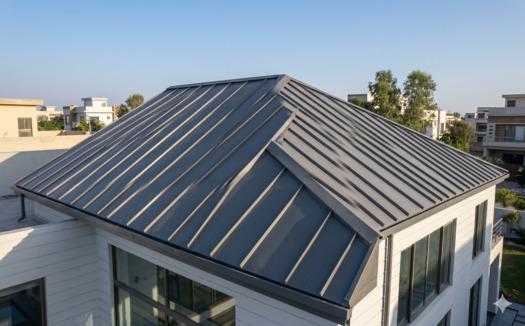
An affordable roof replacement — what most homeowners are actually searching for when they ask "what is the cheapest way to replace a roof" — uses three-tab or basic architectural asphalt shingles, employs a small reputable local contractor (not a storm-chaser or national chain), times the work for the slow season, and includes the structural elements that protect roof life — proper underlayment, ice-and-water shield, drip edge, and ventilation. Cutting any of those last items saves money up front but costs more on the next failure. The cheapest roof replacement and the affordable roof replacement are the same project at different framing — both seek the lowest defensible price without compromising structural integrity.
For a typical 2,000 sq ft asphalt-shingle replacement on a single-story house, the floor in 2026 is roughly $7,000-9,000 with three-tab shingles, off-season scheduling, and homeowner-handled tear-off. The same project hits $11,000-14,000 with architectural shingles installed at peak season by a mid-tier contractor. The premium options run $16,000-25,000+. This guide is about getting good results in the bottom range — the affordable roof replacement that still has 20-30 year service life.
Roof Replacement Cost Calculator
Installed cost range by material, region, roof complexity, and tear-off needs.
Inputs
Most jurisdictions allow only 2 layers; some areas require strip-down.
Results
Total installed cost range
Low
$7,513
Typical
$10,644
High
$13,774
Material choices that save real money
Three-tab asphalt shingles cost $30-45 per square (100 sq ft) for materials. Architectural shingles cost $45-75 per square. The differential on a 2,000 sq ft roof is typically $300-600 in materials, plus a small labour difference because architectural shingles are faster to install. The architectural premium is small enough that most homeowners are better served by the upgrade — three-tab is the right cost-saving choice only if you are not staying in the home long-term or if the property is a rental or flip.
Standard-weight architectural shingles from any major manufacturer (GAF, Owens Corning, CertainTeed) at the lowest grade are the workhorse choice. Premium designer products run 50-150% more per square and are rarely worth paying for unless you have specific aesthetic or impact-rating requirements.
Synthetic underlayment is non-negotiable. Cheap 15-lb felt paper saves about $0.10 per square foot but degrades quickly under modern shingle heat loads and is harder for roofers to walk on safely. The savings on a 2,000 sq ft roof is $200; the lost roof life is typically 3-5 years. Spec a synthetic underlayment by name on every quote.
Ice-and-water shield in valleys and at eaves is also non-negotiable in any climate that sees ice or snow. The material premium is $0.40-0.80 per square foot of shielded area; a typical 2,000 sq ft roof needs 200-300 sq ft of shielded area, costing $80-240. Skipping it saves money but invites ice-dam damage that costs $2,000-10,000 to repair.
Choosing a contractor for the lowest defensible price
Small, locally-owned roofing companies typically quote 15-30% below national chains for the same work product. The chain pays for marketing, sales staff, and franchise fees that the small contractor does not. A locally-owned 2-3 crew operation that has been in business 5+ years and has a clean Better Business Bureau record is the value sweet spot.
Avoid storm-chasers and door-to-door sales operations after a hail or wind event. Even if their prices look attractive, the failure rate on these contractors is high — they may not be local, may not be properly insured, may pressure you into insurance fraud, and may disappear before warranty claims can be made. The "savings" rarely materialize.
Get three quotes minimum. Ask each contractor for itemized line items, not just bottom-line numbers. Compare line-by-line. The lowest quote is often missing items — ice-and-water shield, ventilation upgrades, ridge cap, debris haul-away — that the higher quotes include. Genuine apples-to-apples comparison usually narrows the spread to 10-15%.
Verify state licensing, general liability insurance ($1M+ recommended), and workers compensation coverage independently with the issuing state. Ask for three local customer references whose roofs are at least three years old, and call them.
Labour savings that don't cost you the roof
Homeowner-handled tear-off can save $1.50-2.50 per square foot in labour, which is $3,000-5,000 on a typical 2,000 sq ft roof. The work is physically demanding but technically straightforward — strip shingles off, pull old nails or hammer them flat, remove drip edge, sweep clean. Most fit homeowners can complete a 2,000 sq ft tear-off over a 2-3 day weekend with one or two helpers.
Tear-off yourself only makes sense if: you can rent a 20-yard dumpster (ideally driveway-positioned), you have proper safety equipment (harness, anchor, ladder access), the contractor is willing to start the next morning, and your state and contractor agreement allow homeowner-handled tear-off (some warranty terms require licensed contractor handling).
Do not handle the install yourself unless you have actual roofing experience. A botched DIY installation leaks within 1-3 years, voids warranty coverage, and produces a roof you cannot insure. The "savings" from DIY installation are negative once you factor in early replacement and damage from leaks.
Other labour savings: clean and prepare the work site, move outdoor furniture and vehicles before the crew arrives, and have a clean dump area ready. Each of these saves the crew 30-60 minutes that you do not pay for.
Timing the project for slow-season pricing
Roofing contractors have predictable seasonal demand. Peak season is mid-spring through mid-fall (April through October), driven by warm-weather curing of asphalt sealants and homeowner project timing. Slow season is late fall through late winter (November through February in most U.S. regions). Crews still work during slow season — asphalt shingles install fine down to 40°F — and they discount to keep crews busy.
Contractors will typically offer 5-15% discounts for slow-season scheduling. The offer is rarely advertised — you have to ask. The conversation is "If we schedule for late November or January, what would the price be?" not "Will you give me a slow-season discount?". Most contractors have an internal slow-season pricing tier they will offer if you initiate the conversation.
The trade-off: slow-season weather is unpredictable. A storm during install can delay the project days or weeks. Have your contractor specify weather-delay protocols and confirm tarping practices for partial-completion conditions. The financial savings are real; the schedule risk is real.
False economies that look cheap but cost more
Roofing over an existing layer of shingles (instead of tearing off first) saves $1.50-3.00 per square foot in labour and disposal. It also voids most manufacturer warranties, obscures any deck damage from inspection, doubles the load on the framing, and shortens the new roof's service life by 5-10 years. Most jurisdictions allow at most one re-cover; some require strip-down regardless. The 30-50% savings on the install becomes a 30-50% loss on premature replacement.
Cheap drip edge or ridge cap from a different manufacturer than the shingles can void warranty coverage. Use the manufacturer's matching accessories. The cost difference is small — $50-150 on a typical roof — and warranty preservation matters.
Skipping ventilation upgrades during a reroof is the most common cost-cut and the most expensive long-term mistake. Inadequate ventilation cooks shingles from below and shortens roof life by 5-15 years. If your existing ventilation is undersized (most pre-2000 homes are), the right time to fix it is during a reroof when access is open. Adding proper ridge ventilation costs $400-1,200 during a reroof; doing it later requires a partial reroof.
Cheapest-quote contractor selection without due diligence is the highest-risk false economy. A low-quality install can cost more than the difference in quotes within 3-5 years. Verify license, insurance, references, and BBB record on every contractor before signing.
Realistic budget for the cheapest defensible reroof
For a 2,000 sq ft single-story house with a simple gable roof, basic architectural shingles, full tear-off, synthetic underlayment, ice-and-water shield in valleys and at eaves, drip edge, ridge cap, and standard ventilation: budget $9,000-13,000 in 2026 with peak-season pricing from a mid-tier local contractor. The same project at slow-season pricing with three-tab shingles and homeowner-handled tear-off can hit $7,000-9,000.
Budget at least 5-10% contingency for sheathing replacement discovered during tear-off. Most quotes include 1-3 sheets in the base price; anything beyond that is an add-on at $80-150 per sheet. On older houses, plan for 5-10 sheets in the budget even if the quote does not include them.
For a 2,000 sq ft two-story or steeper-pitched home, add 20-40% to the figures above for access cost. For complex roofs (multiple hips, valleys, dormers), add 15-30%. For coastal or West Coast cities, add 25-40% to the national average.
| Strategy | Typical savings | Risk / trade-off | Verdict |
|---|---|---|---|
| 3-tab vs architectural shingles | $300 - $600 materials | 5-10 years shorter service life | Skip unless rental/flip — small savings, big lifespan hit |
| Off-season scheduling (Nov-Feb) | 5-15% on total quote | Weather delays possible | Worth it if your schedule is flexible |
| Small local contractor vs national chain | 15-30% on labour | Verify licensing, insurance, references | Almost always the right choice if vetted |
| Homeowner-handled tear-off | $3,000 - $5,000 | 2-3 weekend days; safety risk; warranty terms vary | Worth it for fit homeowners with proper safety gear |
| Synthetic underlayment vs felt | Costs $200 more | 3-5 years shorter roof life with felt | Pay the premium — false economy to skip |
| Skipping ice-and-water shield | $80 - $240 saved | $2,000 - $10,000 ice-dam repair risk | Never skip in cold-climate regions |
| Skipping ventilation upgrades | $400 - $1,200 saved | 5-15 years shorter shingle life | Always upgrade during reroof — only easy access |
| Roof-over (no tear-off) | $1,500 - $3,500 | 5-10 years shorter roof life; voids warranty; deck damage hidden | Avoid — banned in many jurisdictions for good reason |
| Generic accessories (drip edge, ridge cap) | $50 - $150 saved | Voids manufacturer warranty | Never — use matching accessories |
| Cheapest-quote selection without vetting | Looks like 20-30% saved | High failure rate; redo within 3-5 years | Always verify before choosing on price alone |
How we sourced these recommendations
Cost-saving recommendations reflect 2026 contractor pricing surveys from major U.S. markets, RSMeans residential construction cost data, and verified manufacturer warranty terms from major asphalt shingle producers (GAF, Owens Corning, CertainTeed, Atlas, IKO). Off-season discount rates reflect documented patterns from independent contractor associations.
For full-scope cost references that pair with this cost-saving guide, this site has dedicated tools. The roof replacement cost reference covers full-project pricing by region and material. The roof quote guide covers what a quality bid should include.
For specialized cost references, related pages cover the surrounding workflow. The cost of roof repair page covers minor repair budgets vs. full replacement. The roof sheathing replacement cost reference covers partial-deck-replacement budgeting. The diy roof replacement cost reference covers what self-management saves and what it costs in time.
For material-specific pricing comparisons, several references cover the material side. The roof asphalt shingles prices reference covers shingle pricing in detail. The roofing materials prices guide covers the full range of material options. The roofing labor reference covers labour rates separately from material costs.
Need to run the numbers?Use the free roof pitch calculator on the home page to convert pitch to angle, calculate rafter length, or estimate roof area in any unit.